How to Trust Yourself Again: 7 Ways to Rebuild Self-Trust
Practical steps to quiet the doubt, trust your judgment, and make decisions with confidence.

By Cory Deighan, Board-Certified Coach
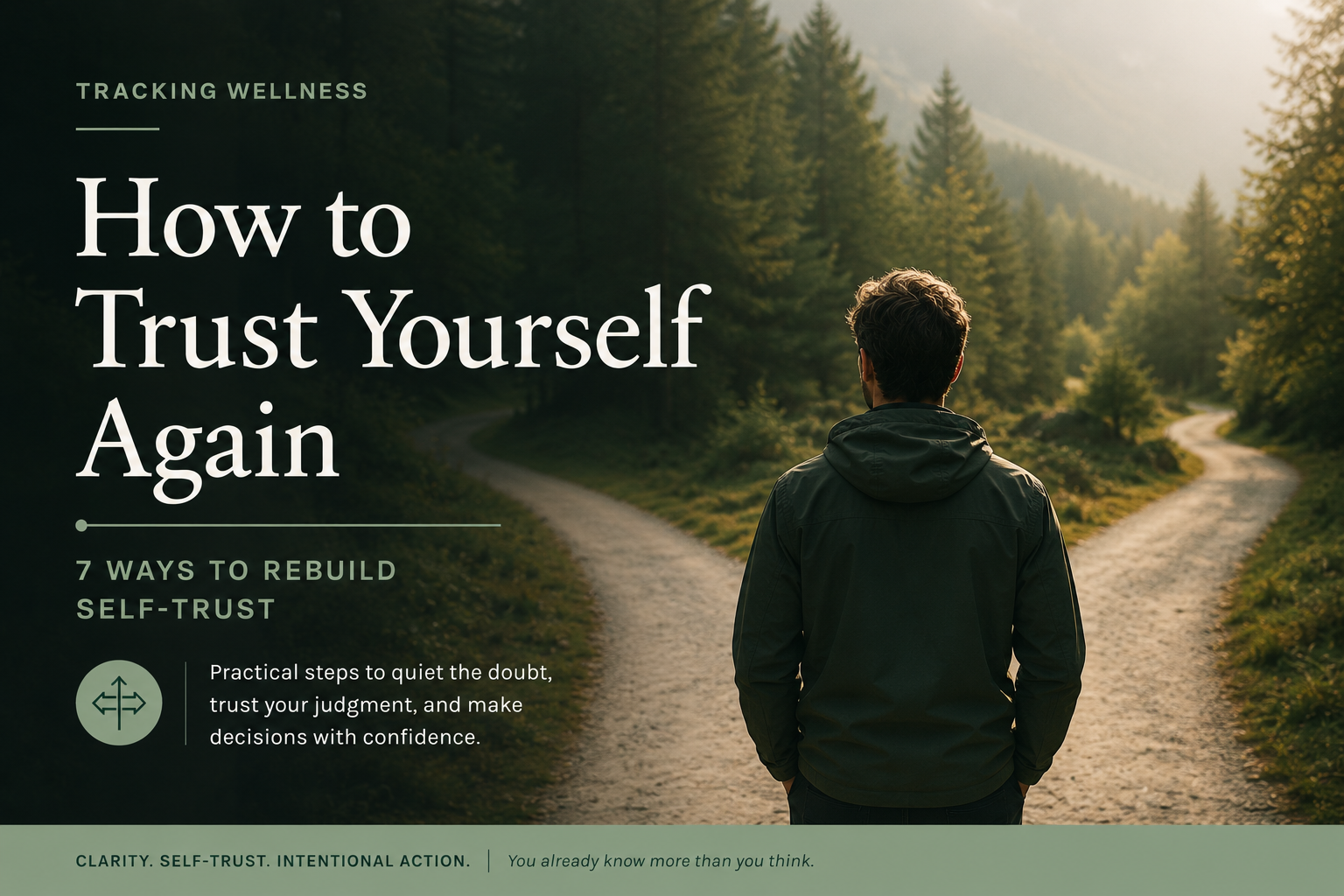
There are moments when making a decision feels harder than it should.
You know the options. You've thought through the consequences. You've probably replayed the situation more times than you'd like to admit.
And yet, you still don't feel sure.
So you ask someone else what they think. You search for more information. You reconsider the decision you already made. You look for one more piece of evidence that will finally make the "right" answer obvious.
Sometimes that helps.
But sometimes the problem isn't that you need more information.
It's that you've stopped trusting yourself to know what to do with the information you already have.
That's where self-trust comes in.
Self-trust isn't believing that you'll always make the perfect decision. It's knowing that you can listen to yourself, make a thoughtful choice, and respond to whatever happens next.
And if that trust has faded, it can be rebuilt.
What does it mean to trust yourself?
Self-trust is the confidence that you can rely on your own judgment.
That doesn't mean ignoring advice, refusing help, or assuming you always know best. It means outside perspectives become information you consider, rather than permission you need.
When you trust yourself, you can say:
I may not know exactly how this will turn out, but I trust myself to make the best decision I can with what I know right now.
That distinction matters.
Because many of the people who struggle with self-trust aren't incapable of making good decisions.
Often, they're thoughtful people who have become so accustomed to questioning themselves that uncertainty starts to feel like evidence that they shouldn't act.
Why do I have trouble trusting myself?
Self-trust rarely disappears overnight.
It tends to erode gradually.
Maybe you made a decision that didn't work out and started questioning your judgment.
Maybe you spent years prioritizing what other people expected from you.
Maybe you've become accustomed to seeking reassurance before making important choices.
Or perhaps life simply became noisy.
Work. Family. Responsibilities. Social media. Expectations. Advice. Productivity culture. Other people's definitions of success.
When enough voices compete for your attention, your own can become difficult to hear.
That doesn't necessarily mean your instincts disappeared.
You may simply need enough space to hear them again.
7 ways to rebuild self-trust
Rebuilding self-trust usually doesn't happen through one major breakthrough.
It happens through smaller moments where you practice listening to yourself and acting on what you hear.
1. Notice when you're outsourcing decisions
Pay attention to what happens immediately after uncertainty appears.
Do you text someone?
Search online?
Ask three people what they would do?
Keep researching even though you already have enough information?
Seeking perspective isn't inherently a problem. Other people can help us see things we've missed.
The question is whether you're gathering perspective or asking someone else to make the decision emotionally easier for you.
Before asking for advice, try asking yourself:
What do I think about this before hearing what anyone else thinks?
Write the answer down if necessary.
Give your own judgment a seat at the table first.
2. Separate uncertainty from danger
One reason decisions become difficult is that uncertainty can feel threatening.
Your mind wants certainty before moving forward.
But many meaningful decisions don't offer certainty.
Should I change careers?
Should I have this difficult conversation?
Should I set this boundary?
Should I pursue this opportunity?
Should I walk away?
You can gather information and think carefully, but eventually there may still be an unknown.
Self-trust allows you to move without eliminating that uncertainty first.
Instead of asking "How can I know this is the right decision?" try asking:
Given what I know today, what choice feels most aligned with what matters to me?
That is a question you can actually answer.
3. Pay attention to what you already know
There's a phrase I come back to often in my coaching:
You already know more than you think.
Not everything.
But often more than you give yourself credit for.
You may already know that your workload isn't sustainable.
You may already know that a conversation needs to happen.
You may already know that a relationship, habit, or expectation no longer fits.
You may already know what you want — but feel uncomfortable admitting it because acknowledging it could require action.
Try completing this sentence:
If I stopped worrying about what I'm supposed to do, I think I would…
Don't immediately act on the answer.
Just notice what comes up.
Awareness comes before action.
4. Keep small promises to yourself
Self-trust isn't only built through decisions.
It's also built through evidence.
Every time you tell yourself you're going to do something and follow through, you reinforce the belief that your word matters — even when the promise is only to yourself.
Start small.
Take the walk you said you would take.
Protect the lunch break.
Put the phone away when you intended to.
Have the conversation you've been postponing.
Say no when you mean no.
These actions may seem unrelated to confidence, but they communicate something important:
I listen when I tell myself something matters.
Over time, those small moments accumulate.
5. Stop treating every mistake as evidence against yourself
Sometimes we stop trusting ourselves because a previous decision went badly.
But a bad outcome doesn't automatically mean the decision was bad.
You can make a thoughtful choice with the information available and still encounter an outcome you didn't want.
That's part of being human.
Instead of asking "How did I get this wrong?" try:
What did I know when I made the decision, and what do I know now?
That shift turns mistakes into information instead of indictments of your judgment.
Self-trust isn't believing you'll never get something wrong.
It's believing you can learn when you do.
6. Create space between what you feel and what you do
Trusting yourself doesn't mean reacting to every emotion.
In fact, sometimes it means doing the opposite.
You can feel angry without sending the message.
You can feel anxious without abandoning the plan.
You can feel guilty about setting a boundary without removing the boundary.
You can feel uncertain without reopening a decision indefinitely.
A useful practice is simply to pause.
Notice what you're feeling. Name it. Then ask:
What response would I respect tomorrow?
That small space between emotion and action is where agency begins to grow. It's the same shift you can see play out in these client success stories.
7. Make decisions based on alignment, not approval
One of the hardest parts of rebuilding self-trust is accepting that the decision that feels right for you may disappoint someone else.
That doesn't automatically make the decision selfish or wrong.
You can care deeply about other people while recognizing that their preferences cannot determine every choice you make.
Ask yourself:
What matters to me here?
What am I responsible for?
What am I not responsible for?
What choice allows me to act most consistently with the person I want to be?
Those questions move you away from approval and toward alignment.
And alignment is a much stronger foundation for confidence.
Self-trust doesn't mean having all the answers
There's an important misconception about confidence.
We tend to imagine confident people as people who know exactly what they're doing.
Often, they don't.
They simply trust themselves enough to take the next step.
That's very different.
You don't need to know exactly where a career change will lead before exploring it.
You don't need to know how someone will respond before starting an honest conversation.
You don't need certainty about the next five years to make a thoughtful decision about the next five months.
Sometimes clarity arrives before action.
Sometimes action creates clarity.
When overthinking and self-trust collide
Overthinking and low self-trust often reinforce one another.
You don't trust your judgment, so you think longer.
The longer you think, the more possibilities you discover.
The more possibilities you discover, the less certain you feel.
And the less certain you feel, the harder it becomes to trust yourself.
Breaking that cycle usually doesn't require finding the perfect answer. It requires changing your relationship with uncertainty.
I wrote more about that process in How to Stop Overthinking and Move Forward With More Clarity.
The goal isn't to stop thinking carefully.
It's to recognize when thoughtful reflection has stopped being useful and started keeping you stuck.
A simple exercise for rebuilding self-trust
The next time you find yourself stuck on a decision, take a blank page and answer five questions:
What is actually happening?
What am I feeling?
What do I know to be true?
What matters most to me here?
What is the next reasonable step?
Notice that the final question isn't "What is the perfect decision?"
It's simply: What comes next?
That's often enough.
You don't need to become someone else
Rebuilding self-trust isn't about becoming more decisive, fearless, or certain.
It's about rebuilding your relationship with your own judgment.
You can still ask for advice.
You can still change your mind.
You can still feel nervous.
You can still make mistakes.
The difference is that those things no longer automatically mean you're incapable of knowing what's right for you.
You learn to listen.
You create enough space to understand what matters.
And then you practice taking the next step. That's much of what we work on inside one-on-one coaching.
Because more often than you think, the answer isn't somewhere outside of you. And if the bigger question is direction rather than a single decision, start here: What to Do When You Feel Lost in Life.
You already know more than you think.